Scheduling Guides
How to Plan Paraprofessional Breaks and Lunch Coverage
By Para Schedule4 min read
A break on one person’s schedule creates a coverage question for the rest of the team. Who takes over the duty, where do they need to be, and what are they leaving behind?
A useful paraprofessional break schedule answers those questions before the day begins. Record the break, name the relief adult, and check that the covering person is available for the full assignment, including the handoff.
Start with the duties that continue during the break
List the responsibilities that still need an adult while someone is away. These might include an assigned classroom role, a supervision area, or support during a transition.
Keep the description specific enough for the relief adult to understand the task. “Cover Avery” depends on knowing Avery’s entire day. “Take over the assigned activity-station role in Room 104” tells the covering adult where the work is.
The teacher or designated school lead should decide which duties need coverage and who is qualified and authorized to provide it. A clear schedule records those decisions.
Check the covering adult’s whole schedule
A person who is free at 10:00 may still need to be somewhere else at 10:10. Review the full relief interval against that person’s other assignments, breaks, meetings, and travel between rooms.
Then check the duty they would normally be doing. Moving a name into one gap can create another gap elsewhere. If the team cannot identify available relief, flag the unresolved period for the responsible lead before treating the plan as complete.
Include time to arrive and hand back the duty
If a break starts at 10:00, a relief adult may need to arrive earlier to receive the assignment. The returning adult may also need a brief handoff before the relief adult leaves.
Use a realistic allowance for the actual setting. The time needed to cross a hallway may differ from the time needed to move between buildings. Discuss those details with the people doing the work.
A worked break and lunch coverage example
The following is a fictional excerpt from a classroom staffing plan. The team has already confirmed each relief adult’s availability and suitability for the assignment. Durations are illustrative; follow your school’s policies and any applicable employment agreements.
| Adult taking a break | Break or lunch | Named relief and coverage time | Assignment during coverage |
|---|---|---|---|
| Avery | Break, 10:00–10:15 AM | Casey, 9:58–10:17 AM | Take over Avery’s assigned activity-station role in Room 104. |
| Casey | Break, 10:20–10:35 AM | Riley, 10:18–10:37 AM | Take over Casey’s assigned classroom role in Room 104. |
| Avery | Lunch, 11:45 AM–12:15 PM | Jordan, 11:43 AM–12:17 PM | Take over Avery’s assigned supervision area in the cafeteria. |
The relief assignment starts before each break and ends after the return handoff. Those intervals also belong on the covering adults’ schedules.
This table shows only three coverage arrangements. It does not establish the classroom’s overall staffing needs. The complete plan still needs a review of every adult’s duties and the required coverage throughout the day.
Keep adult lunch separate from lunch supervision
“Lunch” can describe two different things: an adult’s own break or a duty supervising students during a meal.
Label them clearly. Use “Adult lunch: unavailable for assignments” for the break and “Cafeteria supervision: assigned area” for the duty. Check that the same person is not expected to do both at the same time.
That distinction also makes a printed schedule easier for a substitute or a colleague to interpret.
Record one-day changes without rewriting the routine
An absence, assembly, or changed assignment may affect who can provide relief on a particular date. Review the affected break arrangements and record the revised plan for that day.
Para Schedule separates the regular routine from changes for a specific date. You can keep the usual pattern while recording the day’s differences. The team remains responsible for deciding the coverage; the application does not choose relief staff or confirm that a handoff has happened.
Planning several adults together, including a relief order and covering a gap with another adult, is part of Para Schedule Plus; see current pricing.
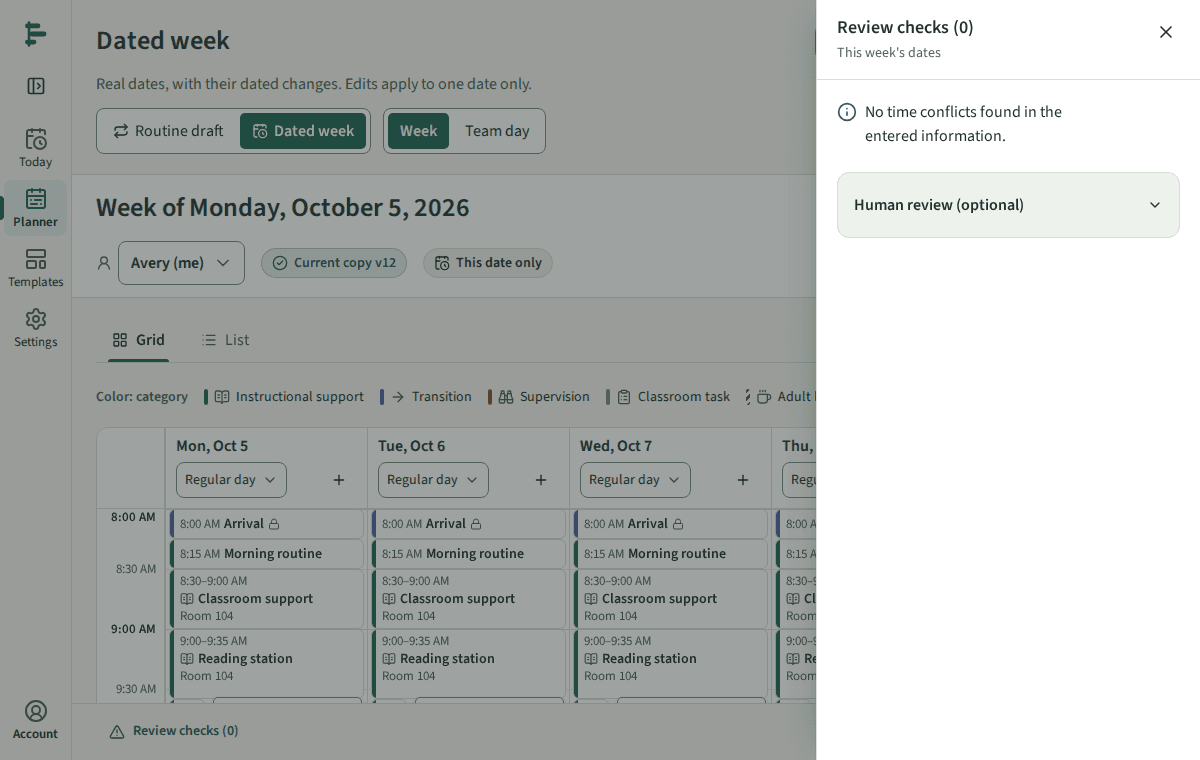
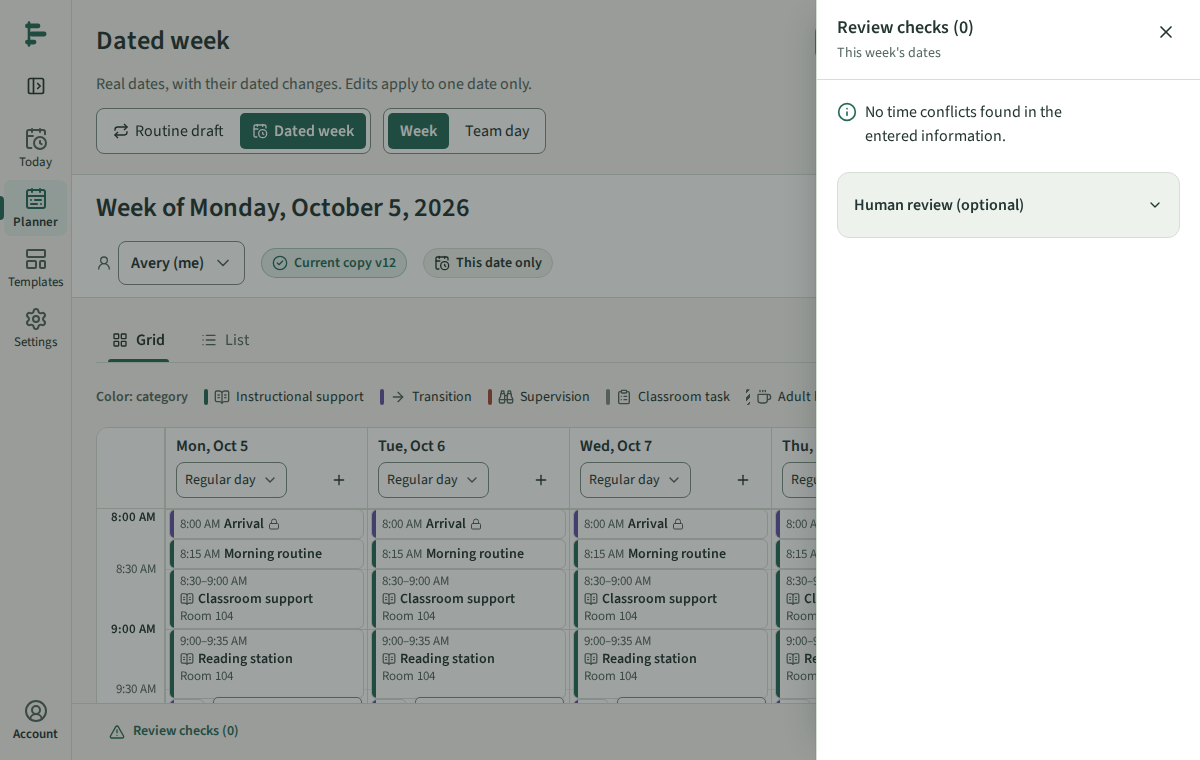
See the absence and coverage guide for a dated-change example and how Para Schedule works for the routine, daily views, and printouts.
Review the copy people will actually use
Before sharing the schedule, check:
- Every break and adult lunch is visible as unavailable time.
- Each duty needing relief has a named, approved covering adult.
- Relief intervals fit that adult’s other commitments.
- Travel and handoff time are realistic.
- Unresolved gaps are raised with the responsible lead.
- Each person has the correct date and current version.
A printed copy does not update when the plan changes. Replace outdated sheets and communicate the change through the school’s usual process.
Keep the shared schedule focused on adult duties, locations, and coverage. Use the school’s approved systems for sensitive student information and detailed support instructions.
For more on assigning adults across a classroom, read the zoning and handoff guide. When you are ready to put your own routine into a clearer format, build your schedule.